

Recording Devices for CCTV Cameras
This article introduces and discusses the differences between recording devices for CCTV cameras. In general, there are three types of recording devices available in the market known as DVR, HVR, and NVR. These devices have differences in recording CCTV camera footage, and comparing them can help make the right choice.
Comparing DVR, HVR, and NVR Recording Devices
Introduction to Types of Recording Devices in CCTV Systems and Their Comparison
Based on the names of the recording devices, namely NVR and DVR, you can identify differences between them. NVR stands for Network Video Recorder, while DVR stands for Digital Video Recorder. One of the most apparent differences is the price, with NVR being generally more expensive than DVR. The primary reason for the higher price of NVR is its specialized and unique hardware. In the field of CCTV cameras, network hardware tends to be more expensive than analog equipment.
NVR is responsible for recording and playing back footage from IP cameras, whereas DVR cannot be directly connected to network cameras, requiring the use of network converters. Using these converters may degrade the image quality of IP CCTV cameras.
Another limitation of DVRs is their inability to handle high-resolution cameras effectively. If the CCTV cameras have very high resolutions, DVRs may not be capable of displaying or recording their footage. Therefore, NVR is the preferred choice for network CCTV cameras.
One advantage of NVRs is their flexibility in a network. You can install one or more NVRs at various points in the network to receive camera footage as needed. If analog CCTV cameras are used in the network, analog-to-network converters can be used to connect them. These converters are designed specifically for this purpose.
Understanding HVR (Hybrid Video Recorder)
HVR is a less well-known device in CCTV systems compared to DVR and NVR. HVR, which stands for Hybrid Video Recorder, serves as a bridge between DVR and NVR devices. It can perform the functions of both simultaneously. However, HVR does not excel in either analog or IP environments professionally. Nevertheless, its unique feature of simultaneously recording and displaying footage from both analog and IP channels makes it exceptional.
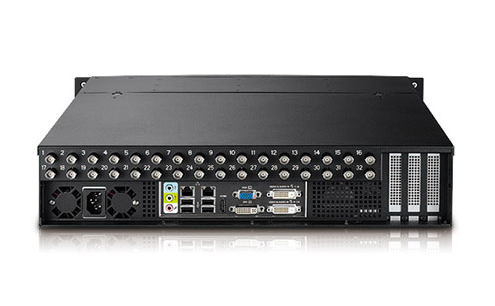
HVR
The differences between IP megapixel cameras and TV-line analog cameras become more pronounced when viewed simultaneously on an HVR device. This difference arises because the highest-quality analog cameras have a resolution equivalent to 4.0 megapixels, which is insignificant compared to the quality of a 1-megapixel IP camera. HVR devices are cost-effective because their prices are half that of a complete IP system. This price difference is acceptable considering the quality difference between the two.
However, HVR has limitations, such as restrictions on the number and type of IP cameras it can support. Some HVR devices only allow a limited number of IP cameras with restricted resolutions.

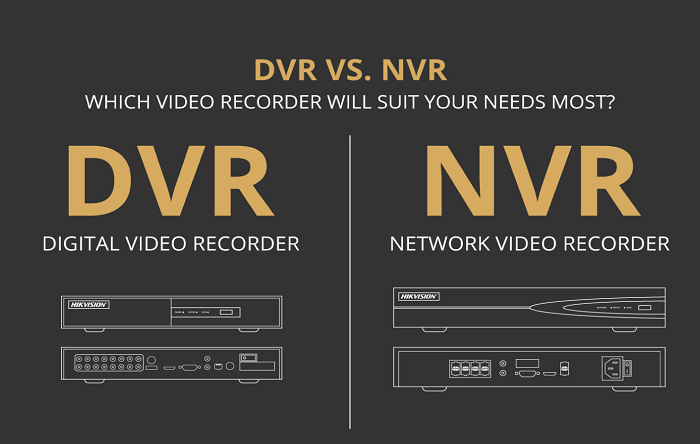
تفاوت دستگاه dvr و nvr
Differences Between DVR and NVR Devices
To clarify the differences between DVR and NVR devices, let’s first provide a brief overview of these two types of devices.
As mentioned earlier, a DVR (Digital Video Recorder) is a digital device used for recording CCTV camera footage. An NVR (Network Video Recorder) is a device specifically designed to record network-based CCTV camera footage.
The primary technical difference between DVR and NVR devices is how they function. In a DVR system, analog cameras are connected via cables to the DVR unit, which then encodes and processes the camera footage for display and recording. In contrast, NVR systems rely on IP (network) cameras, and the encoding and processing of camera footage occur within the cameras themselves. The NVR unit receives and stores the already encoded video data.
Therefore, the fundamental distinction between these devices lies in their operation. DVRs and NVRs handle CCTV camera footage differently, with distinct technical specifications.
DVR systems typically use analog cameras, and the video signals are transmitted through standard cables. NVR systems, on the other hand, rely on IP cameras, and video data is transmitted over the network via Ethernet cables.
It’s worth noting that DVRs work well with analog cameras, making them suitable for older CCTV systems. However, NVRs are the preferred choice for IP camera systems due to their compatibility and ability to handle high-resolution video.

dvr وnvr
Advantages and Disadvantages of DVR and NVR Devices in CCTV
Now that we’ve introduced DVR and NVR devices and discussed their differences, let’s explore their advantages and disadvantages to assist in making informed decisions for your CCTV needs.
-
Difference in Technology:
- An NVR (Network Video Recorder) does not have the capability to connect to analog CCTV cameras such as CVBs, AHD, HDCVI, HDTVI. It can only support network cameras.
- On the other hand, a DVR (Digital Video Recorder) can connect directly and indirectly to various types of analog CCTV cameras. The direct connection is established by plugging the camera’s cable into the video input channel of the DVR. The indirect connection involves connecting the camera to an Ethernet port on the DVR or via a network switch. While DVRs can support various camera types, they may have limitations in recording high-quality images, especially when dealing with high-resolution cameras. Network cameras have smart image analysis capabilities, which are generally not available on DVRs. Therefore, NVRs are necessary if you want to access and utilize these smart features. Both NVRs and DVRs come in standard channel configurations such as 4, 8, 16, or 32 channels.
-
Difference in Networking:
- NVRs can be placed anywhere on the network and support various network protocols such as HTTP, HTTPs, TCP/IP, IPv4/IPv6, UPnP, RTSP, UDP, SMTP, NTP, DHCP, DNS, IP Filter, PPPoE, DDNS, FTP, and Alarm Server. NVRs can access CCTV cameras over the network using their IP addresses.
In contrast, DVRs do not provide separate access to IP cameras, and all video feeds are processed directly by the DVR. NVRs typically offer more advanced networking capabilities, allowing you to access cameras remotely over the internet.

dvr وnvr
-
Smart Features and Image Resolution:
- Both NVRs and DVRs have smart image analysis capabilities, but NVRs are often considered more professional and advanced in this regard. Reputable manufacturers that produce CCTV cameras usually offer NVRs with support for resolutions ranging from 2 to 12 megapixels, and some even support 4K resolution. In contrast, DVRs typically have a maximum recording resolution of 5 megapixels.
-
Operational System:
- DVRs process and execute images directly through a coaxial cable connection to the video input panel on the back of the device.
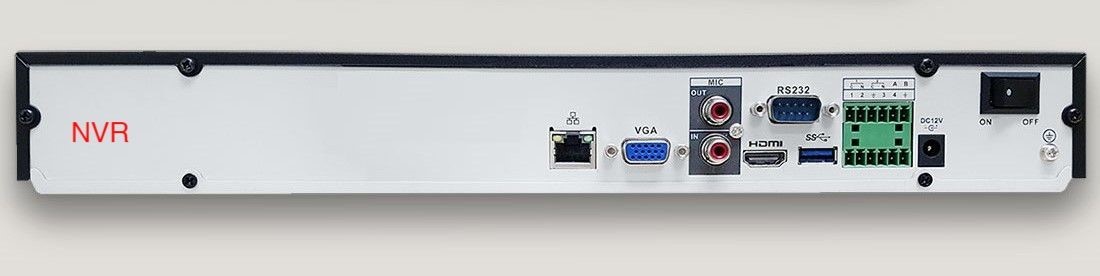
- NVRs, on the other hand, transmit images indirectly. Initially, the camera is connected to a network switch using an Ethernet cable, and then the switch is connected to the NVR’s network port. NVRs do not have individual input ports for each camera channel; they rely on a network switch to transmit images from all connected cameras. Therefore, using a network switch is essential when setting up an NVR to connect to multiple cameras.
-
Storage Space:
- The storage capabilities of the two mentioned devices differ. Storage operations in an NVR can be both on-network and off-network. This means that data can be stored on hard drives within the NVR or on external storage devices such as eSATA hard drives. It’s worth noting that the supported capacity for hard drives varies between the two devices. In DVRs, the maximum supported capacity is typically around 6 terabytes, while in NVRs, it can range from 10 to 12 terabytes. The number of input video channels also affects the number of supported hard drives. For example, a 16-channel device may support 2 hard drives, while a 32-channel device may support 4 to 8 hard drives. This aspect is entirely similar in both devices.
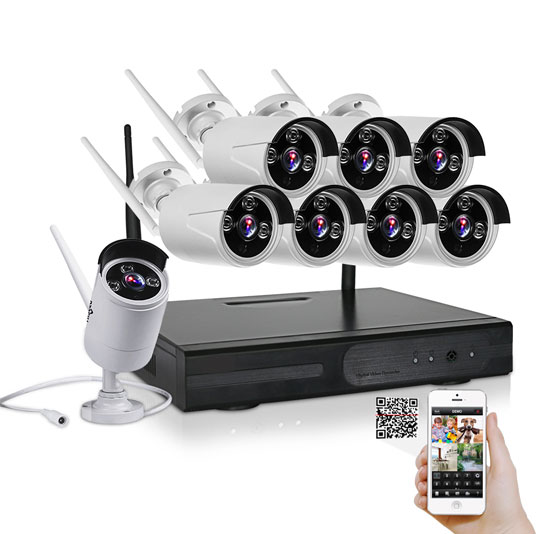
NVR
NVR Advantages of Using an NVR:
- Ease of Mobility: In NVR devices, transferring CCTV camera images is done over the internet, allowing for easy installation anywhere within the network without the constraints of extensive cable routing.
- Easy Cable Connections: NVR devices use PoE (Power over Ethernet) and wireless routers for camera connections, simplifying cable installation compared to DVRs.
- Higher Recording Quality: Network cameras (IP) used with NVR devices offer high-quality images, with greater transparency and clarity compared to analog cameras.
- Remote Accessibility: The distance between IP cameras and NVRs has no significant limitations, allowing remote monitoring of camera images even across long distances and in other countries.
Disadvantages of Using an NVR:
- Signal Instability: Since NVR devices operate over the internet, occasional interruptions in the signal may occur, especially if signals from nearby devices overlap and interfere.
- Limited Compatibility: Not all NVR devices support all types of IP cameras. To prevent issues, it’s recommended to use compatible and matching NVR devices.
Advantages of Using a DVR:
- Lower Cost: In the market for CCTV cameras, prices are a significant factor. If there is a budget constraint, using a DVR device is recommended.
- No Signal Worries: DVR devices do not rely on the internet, so there are no signal interruptions.

DVR
Disadvantages of Using a DVR:
- Extensive Cable Routing: Analog CCTV cameras connect to DVRs using cables, which can be cumbersome, especially when multiple cameras are involved.
- Lower Image Quality: When comparing image quality, DVR cameras generally offer lower resolution than NVR cameras.
- Lack of Remote Access: Using analog CCTV cameras with DVRs does not support remote access over long distances, as it can introduce signal interference with increased distance.
Conclusion: The question of whether DVR or NVR devices perform better is a common one, but there is no definitive answer. The technology in both types of devices is continually advancing, so choosing the right type of CCTV camera largely depends on individual needs. NVR devices offer advanced features and easy installation but are influenced by the intended purpose and camera placement. It’s advisable to consult with security system experts before purchasing CCTV cameras and surveillance systems to make informed decisions.
Please note that the text you provided appears to be a detailed comparison between NVR and DVR systems, along with their advantages and disadvantages. If you have any specific questions or need further clarification on any points, please feel free to ask.


Leave A Comment