
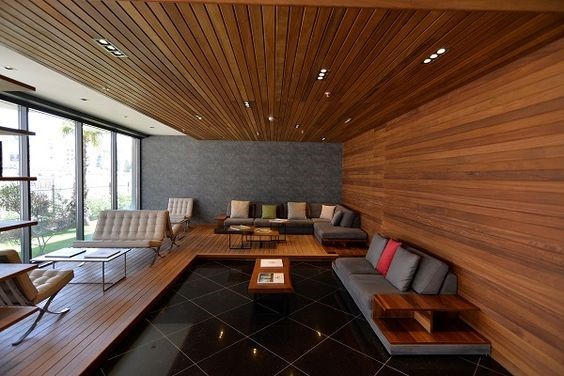
Criticism of wooden roof or thermowood
What is a wooden roof or thermowood?
A wooden or thermowood ceiling is a type of false ceiling that is made from wood or thermowood. This type of ceiling has gained significant popularity in recent years in the construction industry due to its numerous advantages.
A wooden or thermowood false ceiling is typically constructed using metal profiles for the substructure along with wooden or thermowood panels. The most common type of wood used in wooden ceilings is thermowood.
Thermowood, also known as thermally modified wood, is a natural wood that undergoes an advanced heat treatment process. This process alters the wood’s cellular structure, increasing its strength and durability compared to other types of wood. The production process of thermowood involves three main stages: drying, heat treatment, and cooling.
The heat treatment process for thermowood involves removing oxygen from the environment using specialized pumps, preventing the wood from catching fire. The wood is then heated to temperatures between 185 to 250 degrees Celsius. This heat treatment causes a change in the wood’s chemical structure, resulting in benefits such as increased resistance to decay and fungi, improved strength, reduced warping, and enhanced insulation properties. Additionally, the color of the wood changes during this process, typically becoming a shade of brown.
Installation:
- The first step in installing a wooden or thermowood ceiling is the substructure. Substructures can be created using materials like cement and wooden battens or metal battens. If metal battens are used, it is often referred to as metal framing. Cement substructures typically involve the use of a 4 cm thick cement screed. For metal framing, metal battens with dimensions of 40×40 or 50×50 are welded to pre-installed metal studs.
- The second step involves installing the wooden or thermowood panels onto the substructure. If a cement substructure is used, saturated wooden battens are often attached to it using screws and roll plugs. These battens are usually made from Russian wood and are treated with oil and saturating materials to reduce moisture absorption. The thickness of these battens should be at least 5.2 cm. If metal framing is used, an anti-corrosion coating is applied to the metal battens to prevent rusting. It’s recommended to install wooden battens on metal framing as well to avoid direct contact between the metal and thermowood. This is because wood and metal have different rates of expansion and contraction, and the wooden battens act as a buffer.
Key Considerations:
Implementation tips
- The first and most important point in the installation and execution of a wooden or thermowood roof is to make sure that the substructure is done correctly and that the substructure is completely level so that the cleanliness of your final design attracts the viewer’s attention.
- The dimensions of wood change due to changes in weather, therefore, a distance of 40 to 60 cm should be observed between the wooden profiles of the substructure.
- If a substructure with metal cans is used, Thermowood should not be installed directly to metal cans because the weather changes cause contraction and expansion of the metal profiles, which causes damage to the wooden or Thermowood roof.
- Wooden timber used in infrastructure does not need to be painted.
- The distance between the wooden screws of the substructure in the basic installation and implementation of the wooden or thermowood roof is 50 cm.
Advantages of Using Wooden or Thermowood Ceilings:
- Wood adds warmth and character to the space through its natural appearance and color.
- Wooden or thermowood ceilings are resistant to color fading, and their color remains stable over time.
- Wood has sound-absorbing properties, making it an excellent acoustic material that minimizes noise pollution.
- Repairing and replacing damaged wood panels is relatively easy and cost-effective.
- Wooden or thermowood ceilings are highly resistant to various weather conditions and do not undergo significant dimensional changes.
- Wood helps retain heat in the environment, contributing to energy efficiency, particularly in cold climates.
- Wood is recyclable and environmentally friendly, as it does not produce construction waste.
- Wood has excellent mechanical strength and is resilient against impact.
- Wooden ceilings offer a wide range of design possibilities, allowing for creative interior designs.
- Wood ceilings are earthquake-resistant.
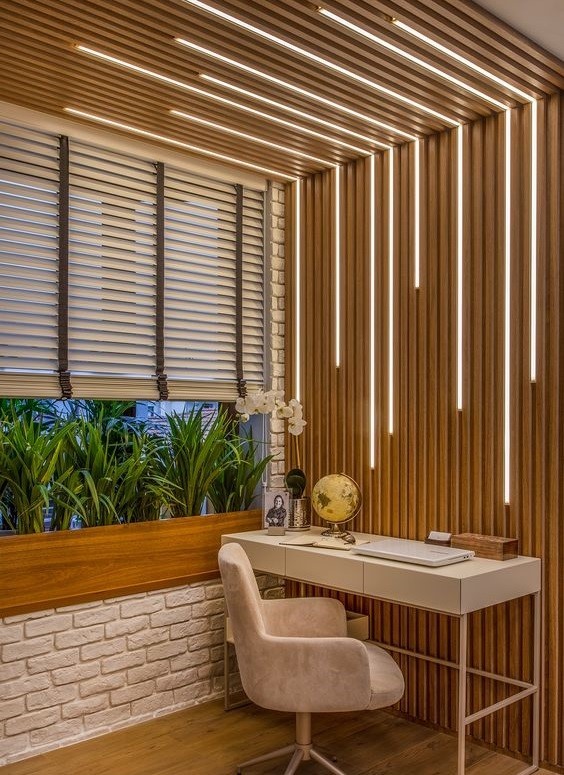
- Combining wood with lighting systems can create a luxurious and calming atmosphere, enhancing the overall aesthetics of the space.
What should be considered when designing the interior decoration of a coffee shop?
When designing the interior decoration of a café, there are several key factors to consider to ensure that the final design is excellent. These considerations will help you make the best choices and set up your business for success. While specific details may vary from person to person, here are some common and general factors to take into account:
- Space: The café’s square footage can significantly impact the overall aesthetics and possibilities for design. A larger space allows for more creative and attractive designs.
- Creativity: Consider creative elements such as live or ambient music, modular walls, and decorative water features, among others, based on the available space and preferences.
- Furniture Arrangement: Pay attention to the layout of chairs, tables, and other furniture items, ensuring they follow principles of Feng Shui for a harmonious and comfortable environment.
- Lighting: Proper placement of fixtures and hanging elements like pendants and chandeliers is crucial for creating the right atmosphere.
- Color Coordination: Ensure that the colors of materials and decor items are coordinated to create a visually appealing and cohesive look.
- Material Quality: Use high-quality materials and furnishings during construction and decoration to ensure durability and aesthetics.
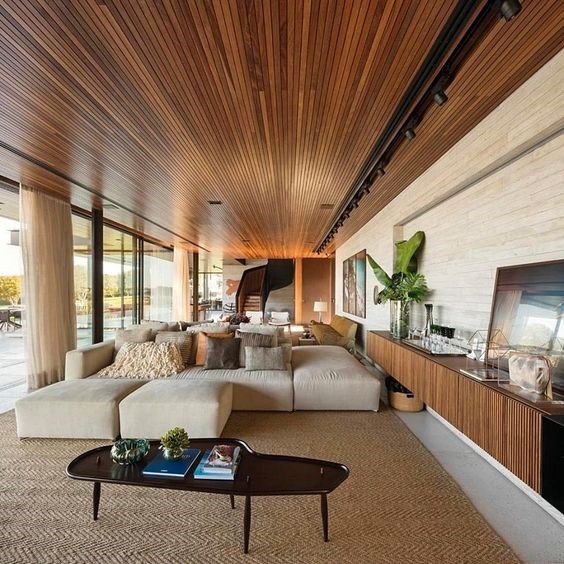
Disadvantages of Wooden or Thermowood Ceilings:
Despite the numerous advantages mentioned, wooden or thermowood ceilings also have some disadvantages, including:
- Weight: Wood materials are heavy, which can increase the overall weight of the building.
- Susceptibility to Pests: Wood structures are vulnerable to pests, such as termites, which can lead to decay and the formation of holes. Regular treatments may be required to prevent this.
- Lack of Mobility: Unlike some other types of false ceilings, wooden or thermowood ceilings are not easily movable or reusable.
- Fire Resistance: Wood has low resistance to fire, and in case of a fire, it can contribute to the rapid spread of flames. To mitigate this, thermal insulation is applied to wood surfaces.
- Cost: Wooden or thermowood ceilings tend to be more expensive compared to other false ceiling options due to the cost of wood materials.
Remember that a successful café interior design should not only be aesthetically pleasing but also practical and functional to meet the needs of both customers and staff.


Leave A Comment